- Written by - Phil Cuming
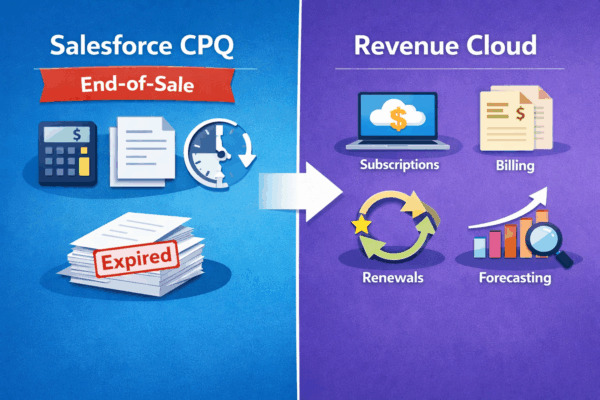
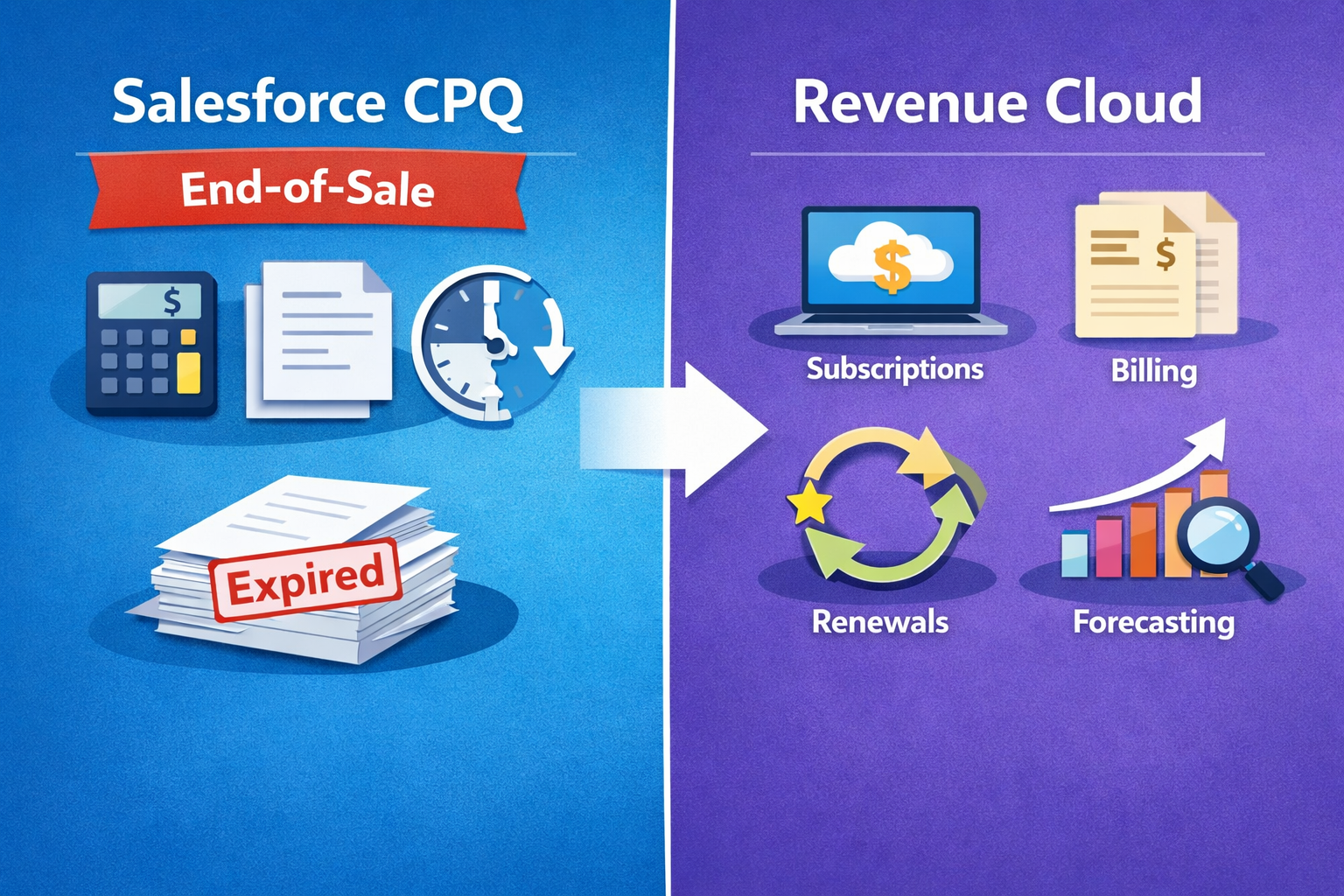
Salesforce CPQ has officially entered end-of-sale status, and for operations, finance, and RevOps leaders, the pressure is on to re-evaluate revenue systems. Is now the time to migrate to Revenue Cloud? This guide breaks down the strategic options, commercial considerations, and migration steps—powered by insights from Comnexa's Revenue Cloud–certified team.
🧠 What Does End-of-Sale Mean for Salesforce CPQ?
If you’re in operations, finance, or revenue operations, you’ve likely heard: Salesforce CPQ is now in end-of-sale. That means Salesforce is no longer offering CPQ to new customers—and while existing users can still renew and expand, future innovation is shifting elsewhere.
For many B2B organisations, this change raises a big question: Should we migrate from Salesforce CPQ to Revenue Cloud now, or wait?
Here’s the thing—this isn’t just a tech issue. It’s a strategic decision with major commercial and operational implications.
🔄 Migrate from Salesforce CPQ to Revenue Cloud: What’s Really Changing?
Revenue Cloud isn’t just a new name—it’s a next-gen suite that encompasses quoting, billing, subscriptions, revenue recognition, and forecasting. It’s Salesforce’s answer to modern monetisation models and the increasing complexity of revenue operations.
Here’s how they compare:
| Feature/Functionality | Salesforce CPQ | Revenue Cloud |
|---|---|---|
| Product Configuration | ✔️ | ✔️ |
| Quoting | ✔️ | ✔️ |
| Subscription Management | Basic | ✔️ Advanced, native |
| Usage-Based Pricing | ❌ | ✔️ |
| Billing & Invoicing | Manual or 3rd-party | ✔️ Native Salesforce Billing |
| Revenue Recognition | ❌ | ✔️ With Revenue Lifecycle Management |
| Automation & AI Forecasting | ❌ | ✔️ Embedded in platform |
| Salesforce Roadmap | Maintenance | Active development and innovation |
📌 Why this matters for Ops, Finance & RevOps:
Revenue Cloud provides better control of the full revenue lifecycle, not just quoting. It allows tighter integration between sales, finance, and customer success teams—which translates into faster billing, fewer errors, and improved forecasting.
🔁 Revenue Cloud Implementation Strategy: A Practical Migration Path
For most businesses, especially those with deep CPQ customisations, a full replatform overnight isn’t realistic—or necessary.
Here’s a Revenue Cloud implementation strategy that works for operations, finance, and RevOps leaders who want results without disruption:
1. Assess your current CPQ landscape
-
How custom is your CPQ setup?
-
Are there manual workarounds in billing or renewals?
-
Where are delays or friction showing up in quote-to-cash?
2. Align on business goals
-
Are you planning to introduce subscriptions or usage-based pricing?
-
Do you need more visibility into revenue streams?
-
Is manual billing slowing things down?
3. Define a phased migration roadmap
-
Start small: one product line, region, or new business unit
-
Run CPQ and Revenue Cloud in parallel if needed
-
Prioritise low-complexity, high-impact use cases
4. Refactor data and workflows
Revenue Cloud introduces new data models—especially around billing and revenue recognition—so expect some redesign.
💡 Comnexa Tip: We’ve guided several clients through this process. The best results come from treating the migration as a revenue transformation, not just a technical one.
5. Upskill your teams
-
Finance and billing teams need to understand the new workflow
-
Sales and ops teams need updated quoting logic
-
Cross-functional alignment is key
💼 Salesforce CPQ End-of-Sale: Commercial Considerations
If you’re in charge of finance or operational strategy, this isn’t just a tech pivot—it’s a business planning moment.
🚩 Risks of Staying on CPQ Long-Term
-
Ongoing reliance on a sunset product
-
Limited scalability for future pricing models
-
Reduced access to Salesforce innovation
-
Potential technical debt and future migration risk
✅ Benefits of Moving to Revenue Cloud
-
Better subscription and billing automation
-
Improved revenue visibility across departments
-
Reduced tool sprawl (no more bolt-ons for billing)
-
Enhanced reporting and forecasting
-
Future-aligned with Salesforce’s investment roadmap
📉 For RevOps in particular, Revenue Cloud enables tighter lead-to-revenue tracking and lifecycle insights that just aren’t possible with CPQ alone.
📦 Rolling Out to New Teams: CPQ or Revenue Cloud?
If your organisation is growing, you may be onboarding new teams or rolling out Salesforce to new business units. Here’s what to consider:
Extend CPQ to New Teams?
✔️ Minimal disruption
❌ Reinforces dependency on an end-of-sale product
❌ May not support evolving pricing models
Roll Out Revenue Cloud Instead?
✔️ Future-ready architecture
✔️ Native support for subscriptions and usage pricing
✔️ Better long-term ROI
❌ Requires training and process alignment
Hybrid Strategy?
Many businesses are now using a dual approach:
-
Legacy teams remain on CPQ temporarily
-
New teams launch with Revenue Cloud
-
CPQ gradually sunset as part of a phased plan
📣 Comnexa’s experience: This hybrid rollout allows companies to avoid a “big bang” and learn from live use cases before scaling further.
🧠 FAQs for Ops, Finance, and RevOps Teams
Q: We just invested in CPQ—do we need to start over?
No. Revenue Cloud builds on the foundation of CPQ. Some logic and structure can be reused, but expect changes in billing and contract management.
Q: How long will Salesforce support CPQ?
Salesforce hasn’t announced an official end-of-support date, but CPQ is now end-of-sale, and future development will focus on Revenue Cloud.
Q: What’s the typical timeline to migrate?
For most B2B orgs, it’s 6–12 months depending on size and complexity. A phased approach is often fastest with the lowest risk.
Q: What teams need to be involved in a Revenue Cloud rollout?
-
Revenue Operations
-
Sales Operations
-
Finance & Billing
-
IT / Salesforce Admins
-
Business Analysts
🔗 Useful Resources
🎯 What Should Your Team Do Now?
Whether you’re in ops, finance, or RevOps, Salesforce CPQ’s end-of-sale status is your signal to act. Maybe not to migrate tomorrow—but to start planning now.
-
If your revenue model is evolving, Revenue Cloud gives you the flexibility you’ll need
-
If you’re adding new teams, it’s likely better to start with Revenue Cloud
-
If you want to futureproof your Salesforce investment, now’s the time to explore your options
💬 Need help building a transition roadmap? Comnexa’s Revenue Cloud–trained experts are ready to support you with assessments, strategy, and real-world implementation experience.